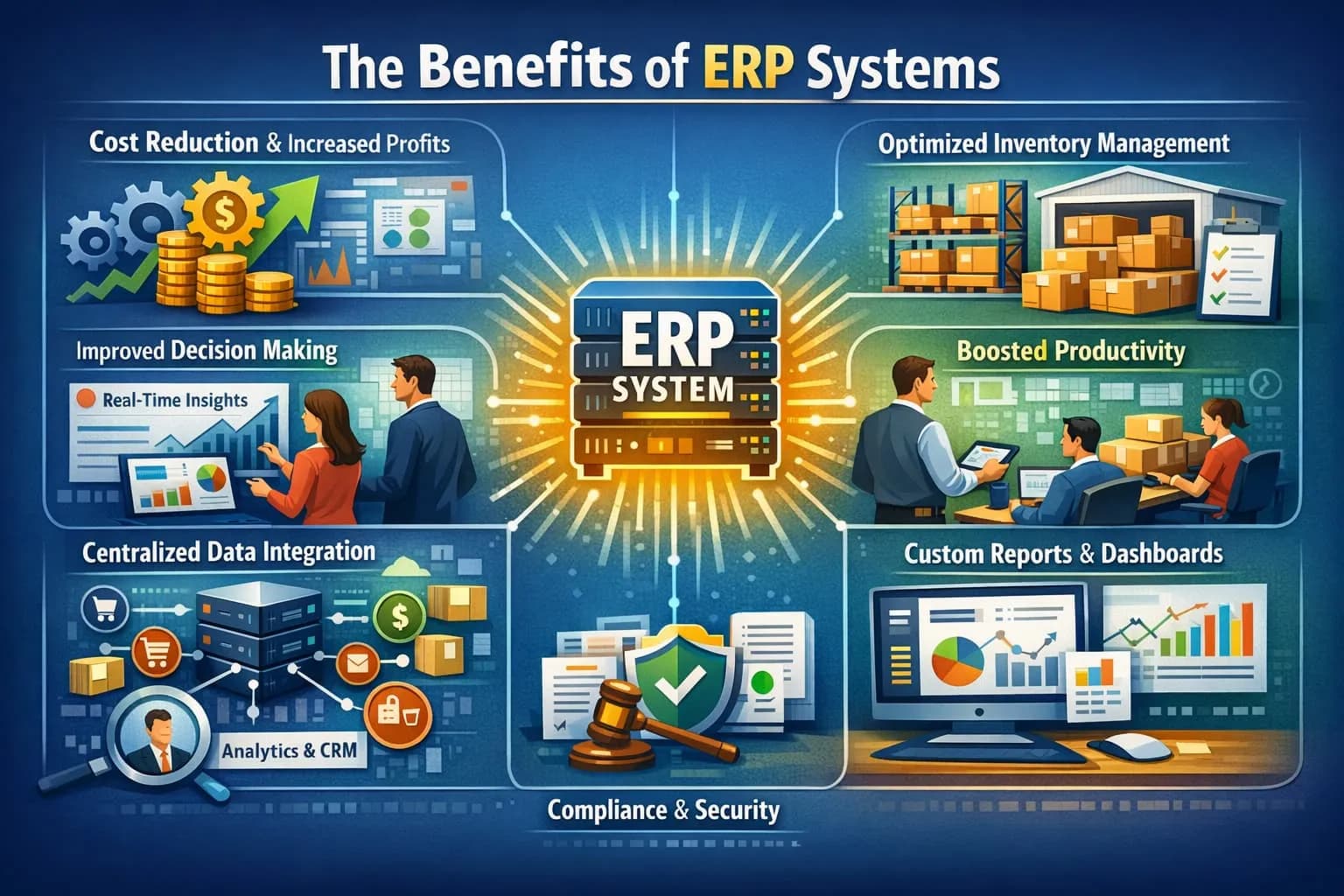
1. How Does ERP Help Reduce Costs and Increase Profit?
An ERP system reduces operational costs by automating processes, minimizing manual errors, and optimizing daily operations. By improving workflows and increasing productivity, it directly enhances profitability. ERP eliminates duplicate data and parallel tasks, saving both time and resources. Ultimately, data-driven decision-making helps identify new profitable opportunities.
2. Does ERP Shorten Decision-Making Time?
Yes. Enterprise Resource Planning systems provide real-time, integrated data across all departments. Fast access to accurate information accelerates analysis and evaluation. Custom reports and management dashboards deliver instant insights into business performance. As a result, strategic decisions can be made faster, creating a strong competitive advantage.
3. How Does ERP Prevent Data Duplication?
ERP creates a centralized database accessible to all departments. Information such as customer data or inventory details is entered only once. Sales, finance, and warehouse teams all work with the same up-to-date data. This integration eliminates inconsistencies and improves cross-department collaboration.
4. Does ERP Improve Customer Insight?
Absolutely. ERP records the complete history of customer interactions. It analyzes purchasing patterns and customer behavior through detailed reports. With this insight, businesses can offer personalized services and targeted recommendations. Customer satisfaction and loyalty increase, leading to higher retention rates and lifetime value.
5. How Does ERP Optimize Inventory Management?
ERP continuously tracks and controls inventory levels in real time. Based on sales forecasts and supply lead times, it calculates optimal reorder points. This prevents stock shortages and excessive overstocking. As a result, storage costs decrease and cash flow improves significantly.
6. Can ERP Measure Employee Productivity?
Yes. ERP systems make workflows and tasks transparent and traceable. Managers can monitor task progress and completion times. This visibility helps identify bottlenecks and process inefficiencies. Targeted training or process reengineering can then improve workforce output and quality.
7. How Does Reporting Work in ERP?
ERP offers powerful and customizable reporting modules. Financial, sales, and operational reports can be generated instantly. Management dashboards with KPIs and visual charts provide a clear overview of business health. Reports are often accessible via both web and mobile platforms.
8. How Long Does ERP Implementation Take and Does It Disrupt Operations?
Implementation time varies from a few months to over a year, depending on business complexity. With proper planning and phased deployment, operational disruption is minimized. Many modern ERP solutions support gradual rollout. Proper training and support help teams adapt quickly, while long-term benefits far outweigh short-term challenges.
9. What Are the Hidden Costs of ERP?
Beyond the initial license cost, hidden expenses may include customization, data migration, and legacy system integration. User training and change management can also add significant costs. Ongoing expenses such as annual support, updates, and maintenance must be considered. Accurate financial planning prevents budget overruns.
10. How Does ERP Support Compliance and Reporting?
ERP systems maintain transparent records and complete transaction audit trails. They can automatically generate required tax and financial reports. By staying updated with regulatory changes, ERP helps businesses remain compliant. International accounting standards are supported, significantly reducing human error and legal risks.